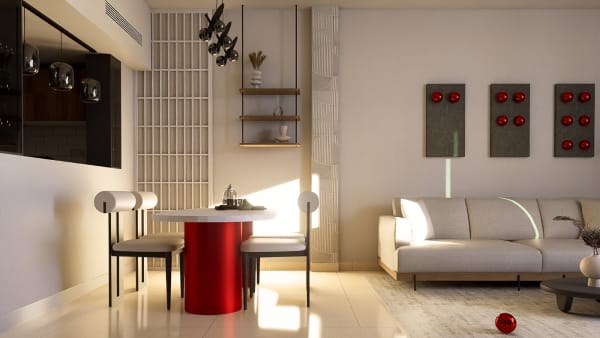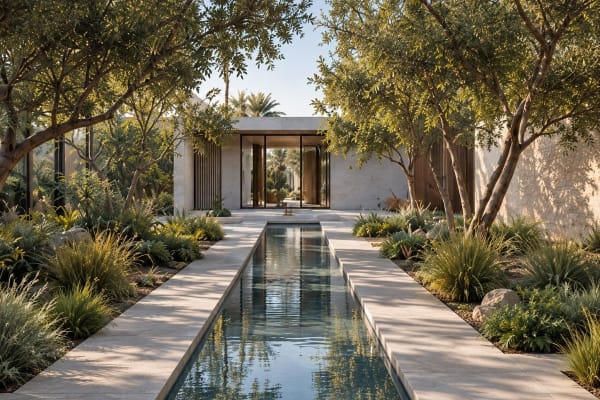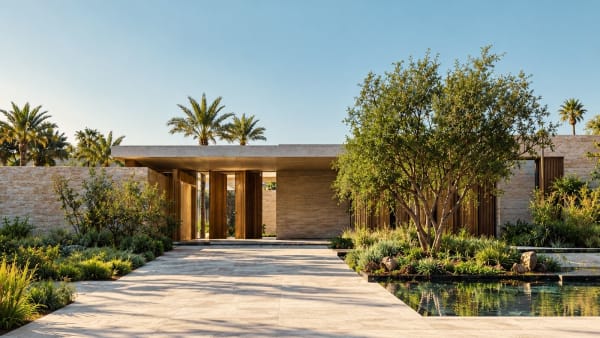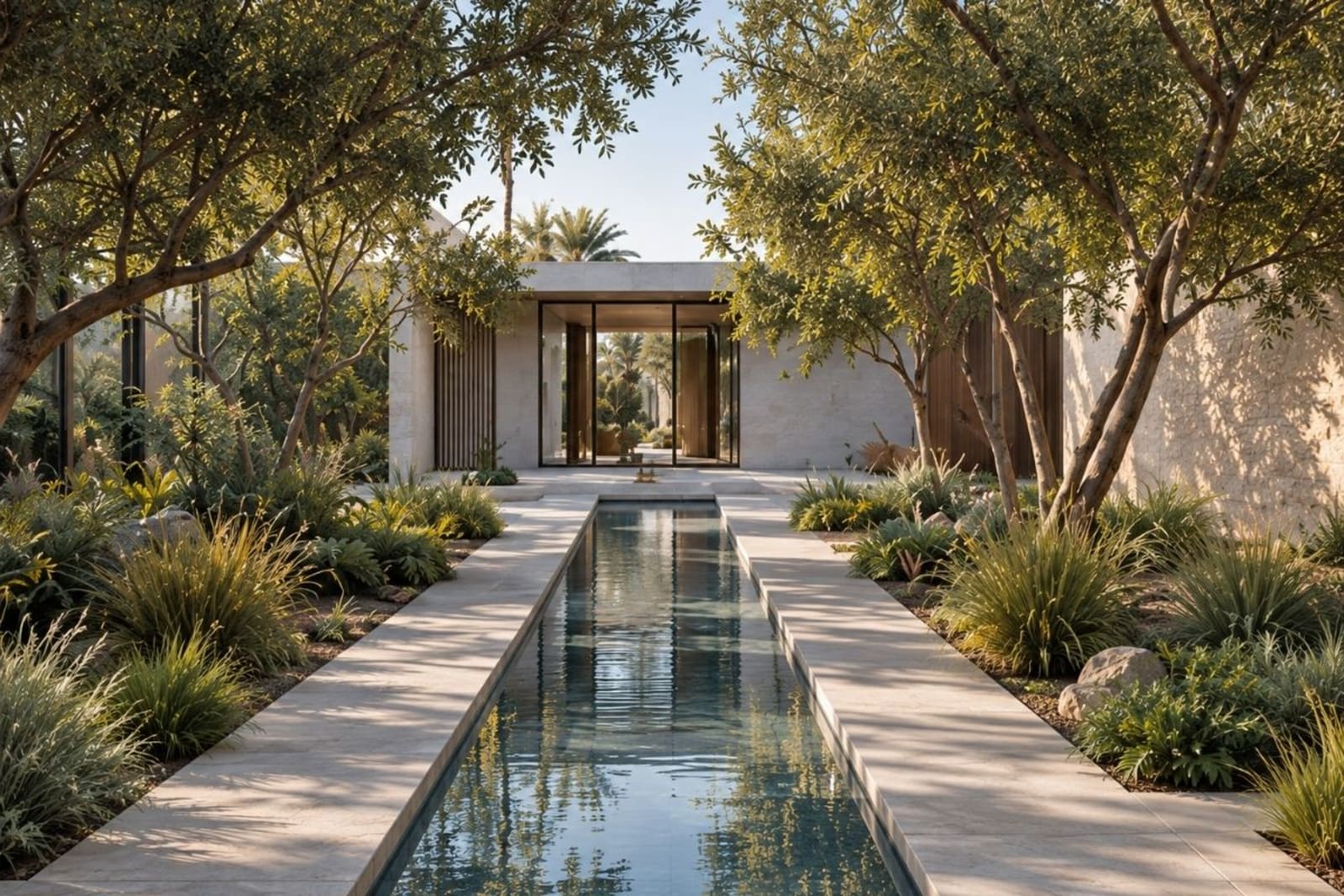
Can a Dubai villa feel lush and green without becoming hard to maintain?
Yes: a garden-led villa can connect everyday rooms to shade, planting and natural materials while keeping care requirements manageable. Begin with the site’s exposure, the household’s routines and a realistic maintenance plan, then design the planting, openings and irrigation together rather than adding greenery after the interior is complete.
Define the connection to nature you want
Describe activities before selecting a visual style. Where would you like to have breakfast, read, watch children play or host visitors? Which rooms do you use most, and at what times? A planted view from a frequently occupied room can be more valuable than an elaborate garden behind a door that stays closed. Use those routines to decide where greenery and outdoor space belong.
A garden-led villa does not need every surface covered with plants. Natural textures, filtered light, shaded thresholds and views can contribute alongside living planting. Compare a small number of well-positioned elements before filling every corner. The design should still feel coherent when a plant needs replacing or an outdoor area is less comfortable during part of the year.
Match outdoor planting to Dubai exposure
An outdoor planting schedule should respond to sun, reflected heat, wind, available soil or container volume and the proposed irrigation. Ask a landscape specialist to select a palette for those actual conditions, including the care available while the household is away. A plant that looks healthy at a nursery has not yet demonstrated that it suits a particular villa terrace or exposed boundary.
Discuss mature size, pruning, leaf drop, root space and replacement access before agreeing the layout. Place plants with similar care requirements together where practical, and keep service routes accessible. DEWA’s water-smart gardening guidance discusses drought-resistant choices and planning irrigation around the garden. Use it as a starting reference alongside project-specific selection, rather than treating any plant name as a guarantee of effortless summer survival.
Indoor planting is a separate brief
Indoor plants need a review of the actual light and room conditions. An attractive position beside glazing can receive direct sun, while a deep internal corner may not provide enough light for the selected plant. Air-conditioning outlets and changes in occupancy also affect how the position should be assessed. Ask the planting specialist to confirm suitability and care rather than choosing only by leaf shape.
Provide protected containers, drainage arrangements appropriate to the location and a way to inspect for leakage. Keep water away from unprotected joinery and electrical equipment. A removable planter can be easier to care for than a permanent installation in a difficult corner. If no suitable living plant fits the conditions, maintain the connection through views and materials instead of forcing an unreliable feature into the room.
Put shade before extra glazing
Study orientation and the hours when the household wants to use outdoor seating. Compare shading from the building, canopies and landscape with the intended activities. An outdoor room should be planned as part of daily circulation, including comfortable access and a useful relationship to the rooms inside. Shade is a design question to resolve early, rather than a decorative accessory selected at the end.
More glass does not automatically create a better connection to nature. Discuss glare, privacy, solar exposure and the building envelope alongside the desired view. The appropriate glazing and conditioning decisions require the relevant project specialists. A carefully framed opening may serve the brief better than a larger uninterrupted surface that creates problems the household then has to manage with closed blinds.
Conceal irrigation without concealing problems
If irrigation is integrated into a planter or joinery composition, allow inspection and maintenance from the start. Pipes, valves, connections and drainage need accessible routes and protection appropriate to the setting. Draw access panels and removable parts alongside the visible finish. A concealed installation should be visually quiet while remaining straightforward to inspect; hiding a connection permanently behind a finished cabinet works against that aim.
Coordinate the planting and irrigation design with the appointed specialists and the joinery details. Confirm how leaks would be detected, where water would go and how an item could be replaced. Keep irrigation separate from vulnerable electrical components and specify suitable protection around adjacent materials. The agreement should identify who installs, tests and maintains the system rather than leaving responsibility between suppliers.
Design a maintenance route
Walk through the future care tasks on the plan. Can someone water, prune and remove a planter without moving a dining table? Can a gardener reach the boundary planting without passing through a private bedroom? Is there access to the irrigation controls? A compact garden becomes demanding when ordinary tasks require special arrangements or damage surrounding finishes.
Include places for tools and the practical handling of plant waste where the property allows. Consider how furniture, external finishes and planted areas will be cleaned together. Materials should be selected for the intended exposure and maintenance expectations, with product suitability confirmed before specification. Describe the care plan in everyday tasks so the household can judge whether it matches the time and support available.
Review care by season
Agree a seasonal review with the landscape or maintenance team instead of leaving the initial irrigation settings unchanged indefinitely. DEWA advises adjusting automatic sprinkler timers to seasonal demand and weather, and checking valves and sprinkler heads. The exact schedule for a particular garden should follow its planting, conditions and responsible specialist’s advice. Keep a record of adjustments so that recurring problems can be identified.
Before summer, discuss irrigation condition, access and arrangements during travel. During hotter periods, observe plant condition and check for leaks rather than assuming additional water is always the answer. When conditions change, review pruning, replacement and the areas the household actually uses. A seasonal plan should also account for indoor planting and the routines of the people looking after it.
Decide what the villa really needs
For an existing home, establish whether the problem is the planting alone or the relationship between rooms and the outdoors. A Space Audit can help frame the brief around actual use, layout and priorities. A focused refresh may be sufficient; a wider renovation or remodel needs its own agreed technical and delivery scope.
The strongest connection to nature is one the household can enjoy and maintain over time. Keep the palette selective, make ordinary care accessible and review the design as a whole. Explore residential interiors or turnkey fit-out to discuss the next stage for your property.
Source: DEWA irrigation guidance. Plant selection and construction details require assessment for the actual property; this guide does not provide a universal species list or a measured performance claim.